2026-01-06
VPN issues rarely fail loudly. Everything works — overseas sites load, nothing breaks. But local traffic starts acting weird. Small lags, random hiccups, hard to explain. Getting through is just the baseline. Smart split tunneling is what separates a smooth VPN from an annoying one.
Most people don't actually expect much from a VPN.
If it gets them through, that usually feels good enough.
But once you've used one for a while, the frustration tends to show up somewhere else.
The problem isn't failing to connect. It's what happens after you do.
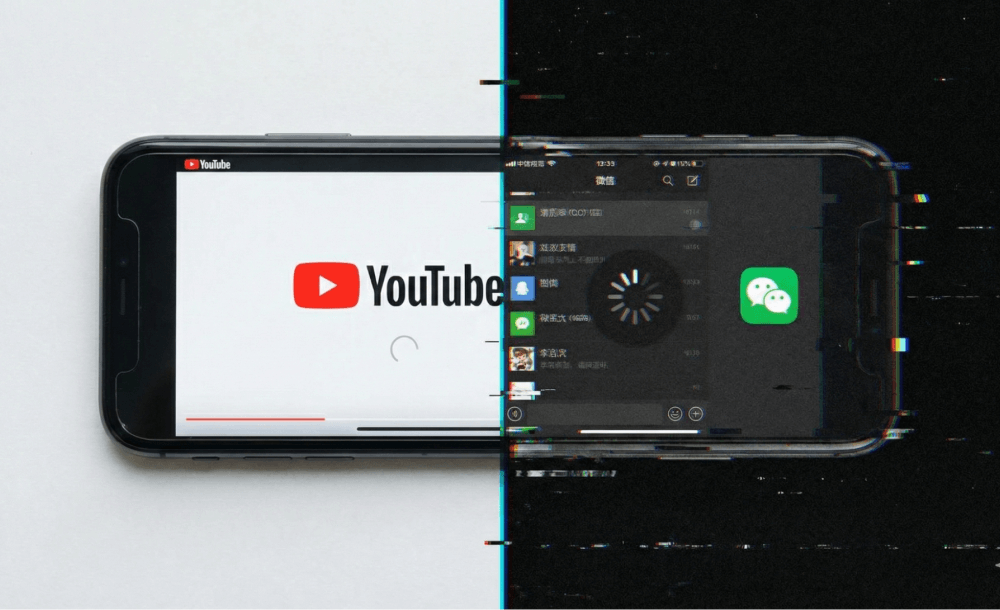
Overseas sites work fine—YouTube plays, Google loads—yet local apps start feeling worse than before. Images in chat apps get stuck loading, domestic apps stutter now and then, and things that used to feel smooth suddenly feel a bit awkward.
It doesn't feel like an unstable network.
It feels more like something was quietly sacrificed.
What's most counter-intuitive is that this usually isn't your connection, and it's not that the VPN servers are bad.
It's that the VPN is doing its job a little too well.
In the early days, most VPNs were built around a simple assumption:
once you're connected, all traffic should go through the VPN.
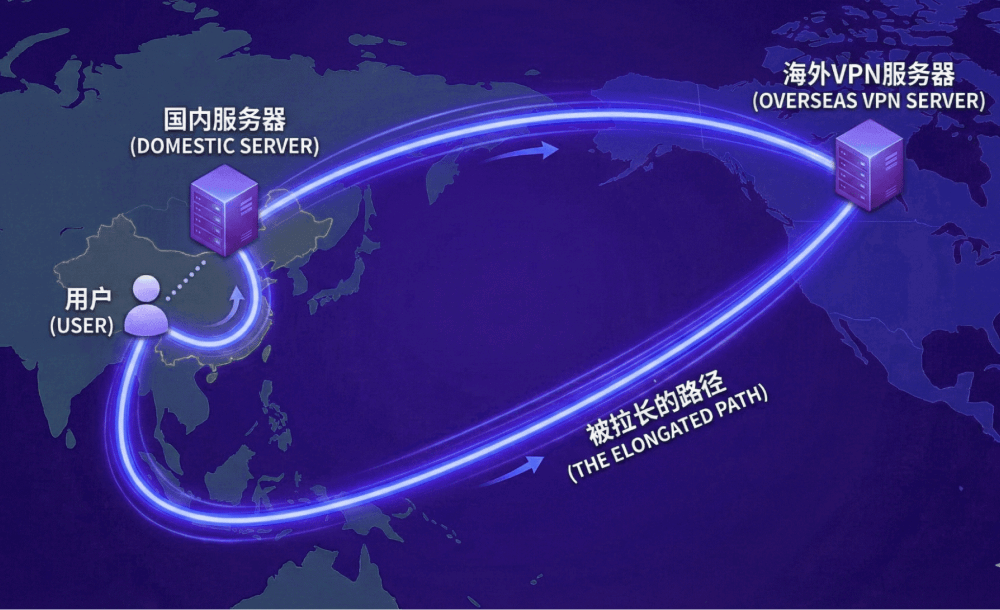
So whether you're browsing overseas websites or opening a local app that never needed a VPN in the first place, every request gets sent to the VPN server first, then routed back.
Overseas access works.
But local traffic—which used to go straight through—now takes a much longer path.
It's like buying a ticket for an international trip, then being told you have to take an international flight every time you commute to work.
The problem is clear, and the answer sounds straightforward.
If only part of the traffic needs a VPN, then only that part should go through it.
That's how split tunneling became a standard feature in many VPNs.
But after actually using it, many people come away with the same feeling:
things are slightly better, but nothing is truly fixed. The experience just shifts from "everything feels slow" to random hiccups that pop up from time to time.
Most VPN split-tunneling setups are surprisingly basic.
In practice, a large number of VPNs rely on publicly available rule lists from GitHub. These lists are community-maintained and usually based on domains and IP ranges. They're easy to understand and easy to implement, but the problems are obvious: updates aren't stable, and the rules themselves are very limited.
This approach works when usage is simple, but it has an unavoidable weakness.
It can roughly tell which app is communicating, but it struggles to tell what a specific request is actually doing at that moment.
Modern internet usage is no longer "one app, one connection."
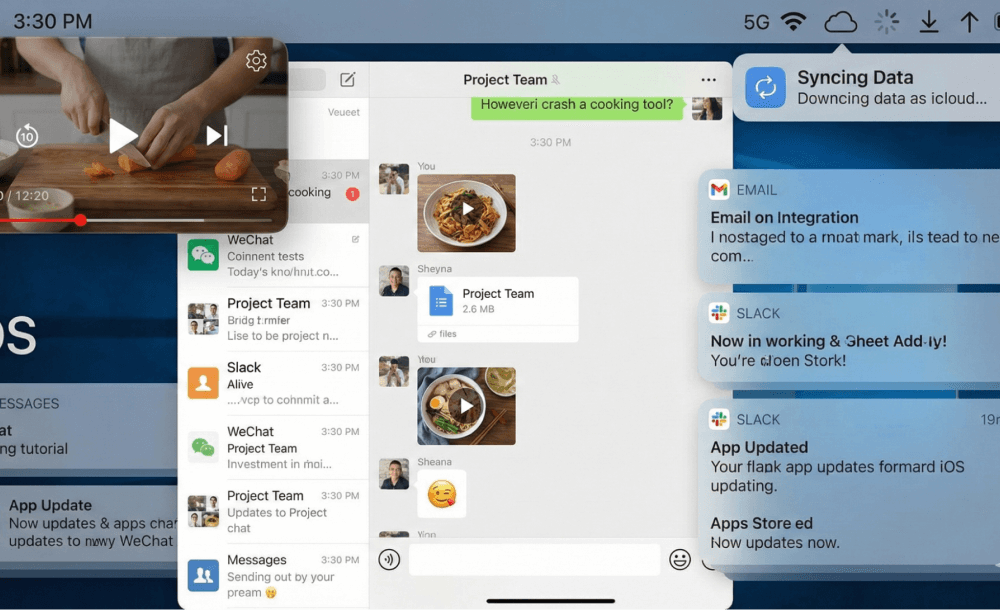
A single app might be handling local communication, loading overseas content, syncing data in the background, and running picture-in-picture playback all at the same time.
When everything is mixed together like this, relying on a public rule list to decide routing inevitably leads to mistakes.
And once routing goes wrong, poor experiences tend to pile up quickly.
A Common Scenario:
The VPN is on. You're watching YouTube in a floating window while chatting in a local messaging app.
From a human perspective, this is simple: YouTube should go through the VPN. The chat app should stay local.
But when split tunneling isn't precise enough, the YouTube stream can be mistaken for part of the chat traffic and routed locally.
The result is a frozen video while messaging continues to work just fine.
The VPN is connected, but it feels like access is only halfway there.
The issue isn't whether a VPN supports split tunneling.
It's what it uses to decide.
When routing logic relies too heavily on public rule lists and single-layer rules, complex real-world usage eventually breaks it.
To solve this, LetsVPN didn't continue down the "just follow the list" path.
Instead, it built its own smart split-tunneling decision system.
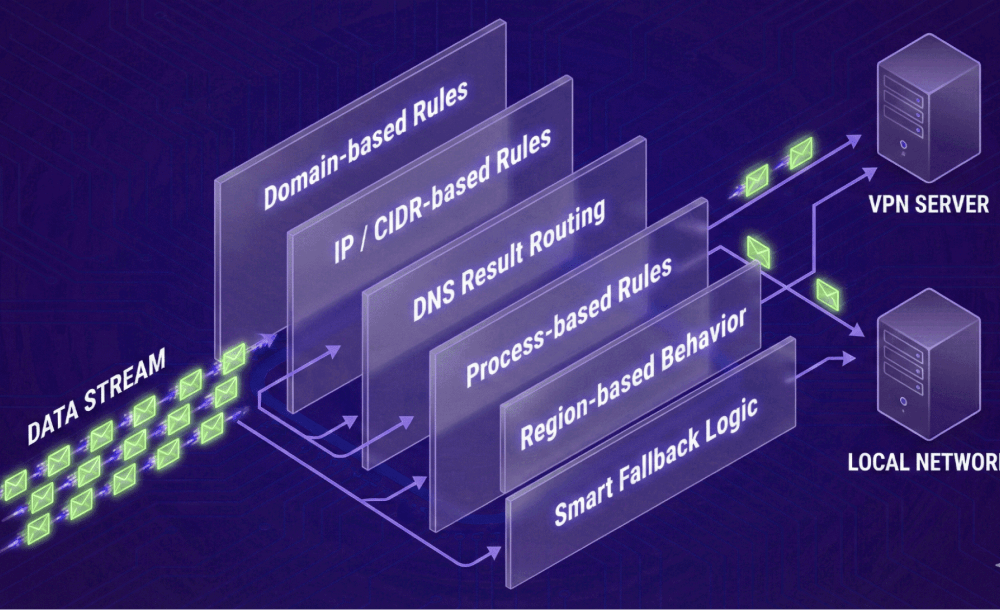
This system includes internal logic such as Domain-based Rules, IP / CIDR-based Rules, DNS Result Routing, Process-based Rules, Region-based Behavior, and Smart Fallback Logic.
These aren't industry-standard terms, but internal concepts developed through real usage.
Multiple layers of logic work together to form what actually makes split tunneling smart.
Put simply:
routing decisions are no longer made by a single rule.
When local and overseas services run side by side and multiple tasks happen at once, any single rule will eventually fail.
Reliable split tunneling depends on layered judgment plus a fallback mechanism.
Smart Fallback Logic isn't about never making mistakes. It's about being able to correct them.
Whether the system can adjust instead of stubbornly sticking to its first decision makes a huge difference in everyday use.
For users, the change is easy to notice:
fewer moments where something suddenly stops working for no clear reason.
From a usage perspective, LetsVPN's smart split tunneling isn't about showing off technical complexity.
It's about minimizing the small routing mistakes that tend to get amplified over time.
Especially when local and overseas services are used together, it aims to avoid two common frustrations:
These sound minor, but they're exactly what determines whether a VPN feels reliable or constantly stressful.
Many VPNs do a good job solving the question of whether you can get through.
What really decides whether you'll keep using one is something harder:
can it do that without breaking what already worked locally?
Imperfect split tunneling doesn't always cause immediate failures. Instead, it slowly wears down patience.
Every delay makes you wonder whether you've hit another routing blind spot.
When a VPN handles split tunneling well enough that you barely notice it's there, that's when it truly understands how modern networks are actually used.